

What Is Home Equity?
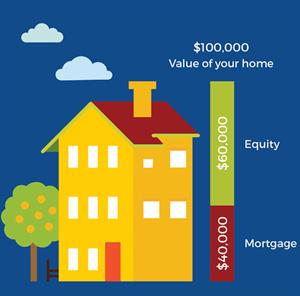
A home’s equity is the amount of money you could expect to have after you sold your home and paid any outstanding mortgages on the property. For example, if your house could be sold today for $100,000, and you had an outstanding mortgage balance of $40,000, the equity in your home would be $60,000 ($100,000 value of your home minus $40,000 outstanding mortgage balance.)Advantages of Home Equity Lending
Using the equity in your home is one of the best ways to finance the things that can enhance the lives of you and your family. Since home equity lending is so efficient, a lot of folks use the equity in their home to pay for home improvements, tuition, a new car or other major expenses. Most people access the equity in their home through a home equity line of credit or a home equity loan. And because you are borrowing against the value of your home, your interest rate is usually quite low.
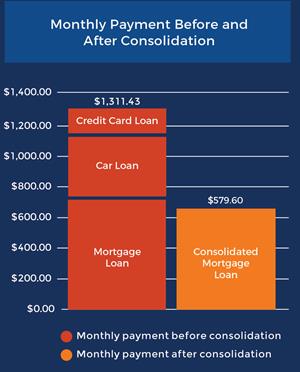
Because of its low interest rates, home equity lending is usually the most effective method of borrowing available to homeowners. In fact, it’s so efficient that you can often take out a home equity line or loan, pay off other higher interest debts, and have a much lower monthly payment. As you can see in the chart below, it’s not uncommon to cut your total monthly payments in half when you consolidate debt with a home equity line or loan1.

Home Equity Lines vs. Loans
There are two types of home equity products. Both products use the equity you have in your home as collateral. When you have an equity line or loan and a first mortgage, you have two active mortgages and make two separate payments. The first payment is your original or first mortgage. The second payment is your equity line of credit or equity loan. These loans don’t have to be with the same lender.Home Equity Line of Credit
A home equity line of credit is a variable-rate loan with a draw period and a repayment period. Home equity lines give you the flexibility to borrow additional funds up to your credit limit. Use your home equity line for whatever you need, whenever you need it. Accessing your funds is as easy as writing a check or using your debit card. You only pay interest on the money as it is borrowed. Once the money is paid back, you may use the funds again. The draw period is a timeframe (usually 5 to 10 years) in which you may borrow on the line and pay it back as many times as you like. You receive a bill each month based on your outstanding balance for either the interest only or for a combination of principal and interest. When the draw period is over, the full balance may be due or a repayment schedule may be set up, depending on your lender. Home equity lines of credit are a great tool when you are uncertain of how much borrowing you will need, or you anticipate having to borrow more funds in the future or for projects like remodeling, that have multiple payments phased in over time.Home Equity Loan
Unlike a line of credit, a home equity loan is a one-time lump sum loan. It’s a good home equity choice if you know the full amount of money needed and you don’t anticipate having to borrow again in the future. You’ll receive the entire amount of the loan upfront and pay interest and principal on that amount right from the start. Home equity loans typically run anywhere from 5 to 30 years, and you make regular monthly payments until the loan is paid off. And unlike a line of credit, home equity loans can be fixed or adjustable rates.Amortizing vs. Interest Only
There are two different methods that lenders use to determine your monthly payment on a home equity line or loan. The first type is referred to as “amortizing,” which simply means that you’re paying back both the interest and principal on your borrowings right from the start, even during the draw period. Almost all first mortgages and many home equity products today have amortizing payments. Amortizing loans are a more stable option because you’re paying both principal and interest throughout the entire life of your loan, making your monthly payment more consistent over time. Interest only loans are exactly what they sound like. During the draw period, your monthly payment covers only the interest on your loan. Interest only loans have two phases: an interest only period and a repayment period. During the repayment period, your monthly payment includes both interest and the repayment of principal. This results in a lower monthly payment in the interest only phase and a higher payment in the repayment phase. Because you’re not paying back principal during this interest only phase, interest only loans don’t make progress towards paying back your loan or replenishing your equity and set you up for a much higher payment in the repayment period. Interest only loans were once quite popular. But because of their tendency to result in higher monthly payments after the draw period, they ended up being a leading cause of the 2008 mortgage crisis.
Determining How Much You Can Borrow
Most financial institutions will allow you to borrow up to 80% of the value of your home, less the balance of your first mortgage. Here’s an example of how to calculate how much you can borrow:Calculate How Much You Can Borrow
(Your Estimated Borrowing Power)
Some financial institutions will allow you to borrow more than 80% of the value of your home; however you most likely will pay a premium (higher rates and/or fees) for this additional borrowing.
Estimating Your Monthly Payment
Amortizing Line of Credit
| Draw Period | 120 |
| Repayment Period | 240 |
| Annual Rate | 0.0450 |
| Loan Amount Balance | $40,000 |
| Draw Period Payment | $202.67 |
| Repayment Period | $202.67 |
Interest Only Line of Credit
| Draw Period | 120 |
| Repayment Period | 120 |
| Annual Rate | 0.0450 |
| Loan Amount Balance | $40,000 |
| Draw Period Payment | $150 |
| Repayment Period | $414.55 |
Equity Loan
| Draw Period | na |
| Repayment Period | 360 |
| Annual Rate | 4.49% APR |
| Loan Amount Balance | $40,000 |
| Draw Period Payment | na |
| Repayment Period | $202.44 |
 Prime Rate
  Fees & Costs
  Minimum Draw
